Archives
-
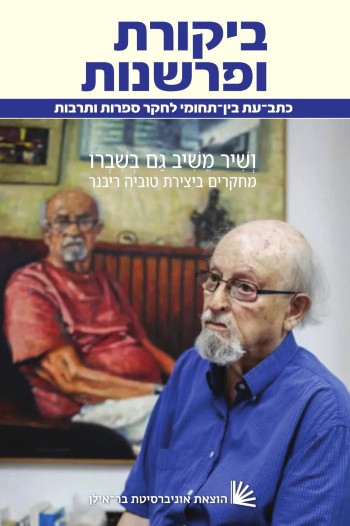
Criticism & Interpretation 49-50
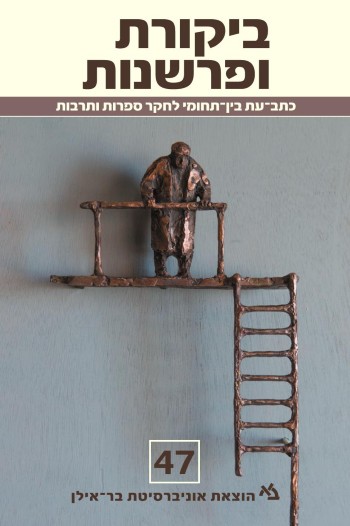
Vol. 49 (2025)Tuvia Rübner’s work is a remarkable phenomenon in the history of modern Hebrew poetry: it emerged simultaneously within two literary traditions, and in both Hebrew and German Rübner was recognized as a "local" poet. Yet despite this dual presence, the Hebrew Rübner remained largely unknown to German readers, while the German Rübner was scarcely known to Hebrew readers.
This double issue of Criticism and Interpretation seeks, for the first time, to bridge that gap in a volume devoted entirely to Rübner’s oeuvre. The essays gathered here examine not only his work itself, but also the ongoing dialogue between Hebrew and German culture, while addressing central questions in literary and cultural studies such as cultural migration, translation, and self-translation.
Another distinctive aspect of Rübner’s work is its constant movement — not only between languages and cultures, but also across artistic media. Rübner was also a gifted and perceptive photographer, and a special section of the volume is dedicated to his photography, curated by Guy Raz.
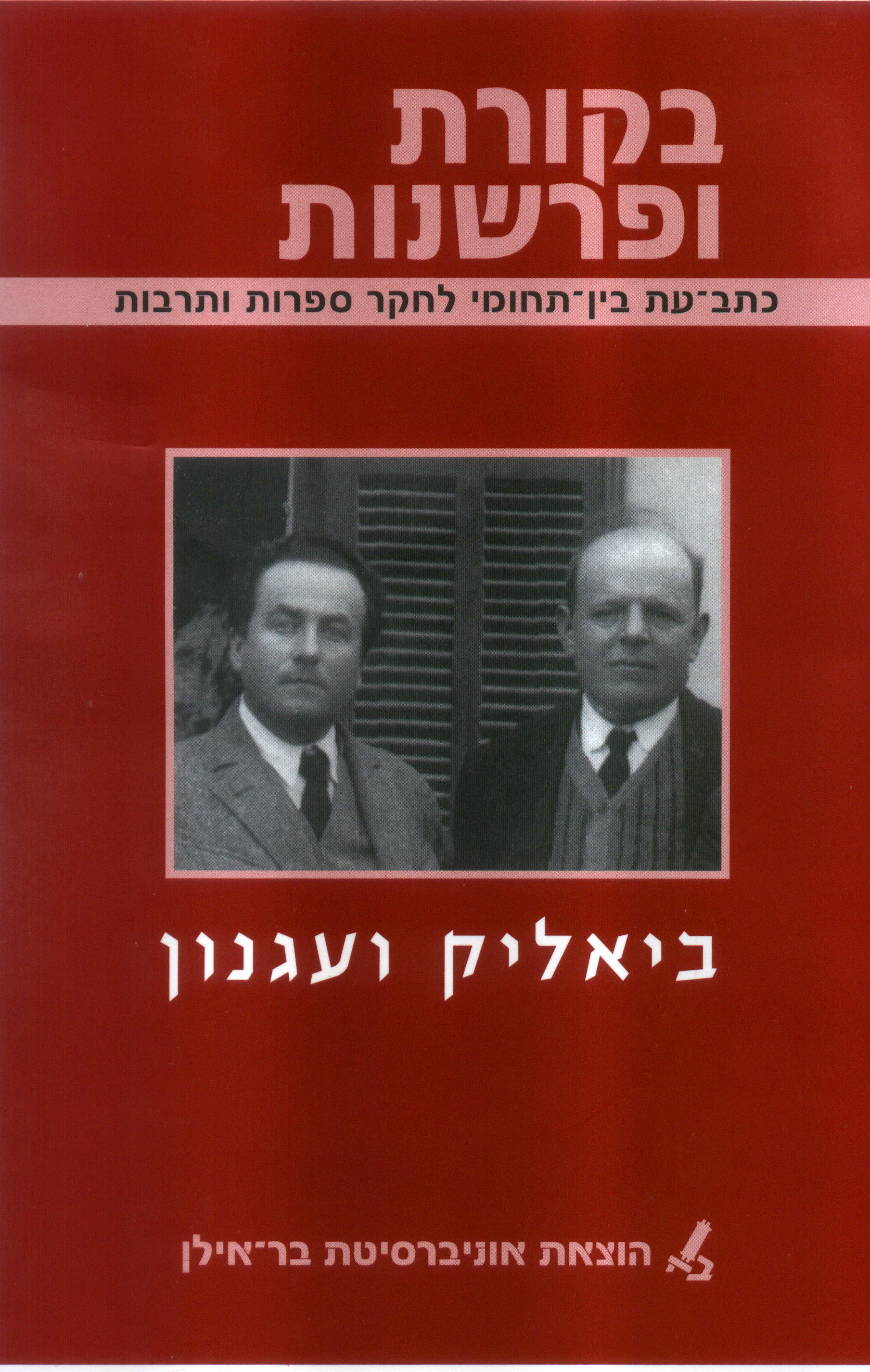
Among the highlights of this issue is the first publication of the correspondence between Tuvia Rübner and S.Y. Agnon, edited by Giddon Ticotsky and Ido Nitzan. Many of these letters, preserved in the National Library of Israel, concern Rübner’s German translations of Agnon’s works — translations that made a decisive contribution to Agnon’s winning the Nobel Prize in Literature.
-
Criticism & Interpretation
Vol. 46 (2020)Children's and Youth Literature – Poetics, Language, History, Ethics
From its inception, Hebrew children's literature has played a key role in instilling the Hebrew language and in assimilating the values of nationalism and Zionism among a future generation. Our great writers and poets have written and still write for children: H.N. Bialik, Asher Barash, Avraham Shlonsky, Leah Goldberg, Natan Alterman, Tirza Atar, David Grossman and Meir Shalev are among the most prominent, but certainly not the only ones. Their literature for adults, as well as the study of children's literature, has not received its proper status in literature departments at universities.
In this issue, twelve articles were collected, each of which illuminates a unique angle of Hebrew and Jewish children's literature in the twentieth and early twenty-first centuries , from poetic, linguistic, historical and ethical aspects. Together, an ensemble of research voices is formed, giving expression to the East and the West, to the Land of Israel and the Diaspora, to secularism and religiosity, which will make a significant contribution to the discourse and contemporary research on children's literature.
-

Criticism & Interpretation
Vol. 45 (2017)Readings in Hebrew Poetry
This anthology of Hebrew poetry readings takes us on a journey between periods, poets and voices in Hebrew poetry throughout the ages. The articles are arranged according to a chronological sequence – from readings and studies in the medieval prosody and in the piyyutim, through research on Rachel Morphorgo's first book of poems, to the cultural activity of Ze'ev Jabotinsky and his linguistic work. In the field of modern Hebrew poetry, a research was dedicated to Alexander Penn, and a special section was dedicated to discussions in the poetry of Leah Goldberg. Other poets whose poetry is examined in the collection are Dan Pagis, Avot Yeshurun, Zelda, Hezi Leskley and Yona Wallach. The thirteen articles included in the book were written by leading scholars in the contemporary research of Hebrew poetry.
-

Criticism & Interpretation
Vol. 44 (2012)Hebrew Songs: Poetics, Music, History, Culture
This collection of articles joins the fruitful research developed in recent years about the Hebrew song. The sixteen articles included have been written by prominent researchers in various research fields: the field of cultural studies and history of Israel before and after the establishment of the state, in the field of music and song, and in the field of poetry and language. This volume’s multidisciplinary character arises primarily from the singular nature of the Hebrew song, as an artistic creation whose realization depends on its audience, giving it social and cultural characteristics as well as artistic and aesthetic value. The volume is divided into three parts: the first two are presented in chronological sequence, from the beginning of the Hebrew song and through the establishment of the state, and are devoted to representative phenomena and poets prominent in these periods, including Nathan Alterman, Naomi Shemer, Haim Hefer, Ehud Manor and others. The third section discusses fundamental phenomena in the study of Hebrew music and its influences. -
Criticism & Interpretation
Vol. 43 (2010)The issue On the Brink: Liminality in Literature and Culture sets out to explore different aspects of geographical, anthropological and cultural border situations, and cross-cultural encounters within and outside of Hebrew literature. The condition of social-cultural liminality comes to light in this collection in a variety of possibilities: as a state of ambivalence and vagueness, and at the same time as a source of inspiration made possible by the ''constant mobility of the other'' and the simultaneous presence in different cultural territories. Along with the concept of liminality, the last section of the volume examines different aspects of the concept of ''poetic justice'' from a social, philosophical, moral and poetic point of view. This volume, dedicated with deep esteem to Prof. Yehuda Friedlander in honor of his 70th birthday, reflects the broad perspective of his academic research and intellectual quest.
-
Criticism & Interpretation
Vol. 42 (2010)Aesthetics Poetics and New Readings
This issue is devoted to an interdisciplinary discussion of the relationships between different areas: theories of aesthetics and literary research, the philosophy of language and the ontology of fictional entities, historiography of culture and ethics and political thought. The contributors come from varied academic fields: philosophy, literature, study of discourse, hermeneutics, art history and interpretation of culture. Along with theoretical studies, the journal includes poetic analyses and interpretations of a wide variety of literary and artistic works from the classicism of the Middle Ages and the Renaissance to the modernism of Europe and Israel.